
Pope Leo condemns ‘zeal for war,’ weak multilateralism in speech to diplomats
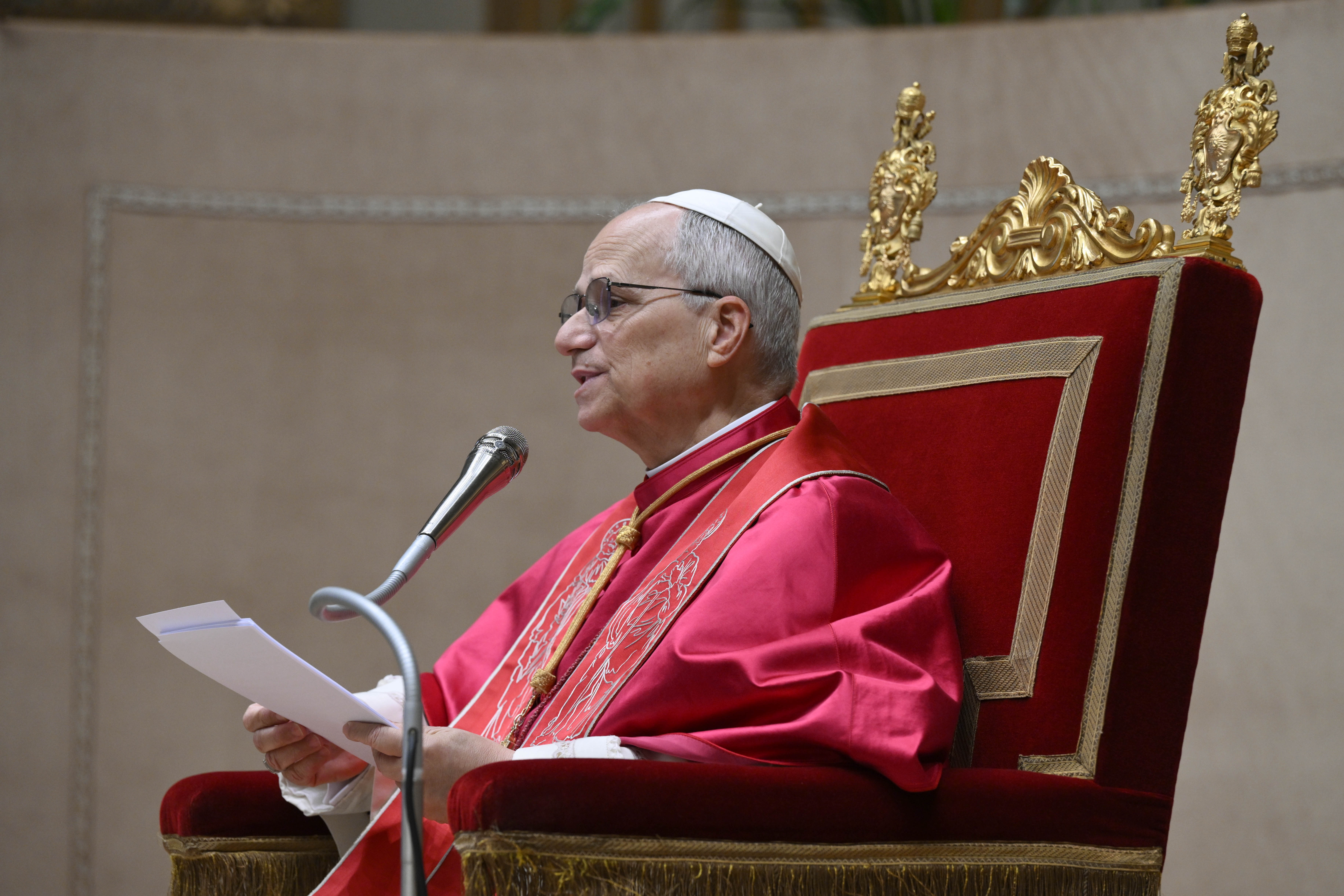
Pope Leo XIV addresses ambassadors and other diplomatic representatives to the Holy See in the Apostolic Palace on Jan. 9, 2026. | Credit: Vatican Media
Jan 9, 2026 / 10:17 am (CNA).
Pope Leo XIV condemned the weakening of international multilateralism and the increased use of force in a speech to diplomats at the Vatican on Friday.
He also said states should respect fundamental human rights, such as religious freedom and freedom of speech, and comply with international humanitarian law in the lengthiest speech to date of his pontificate.
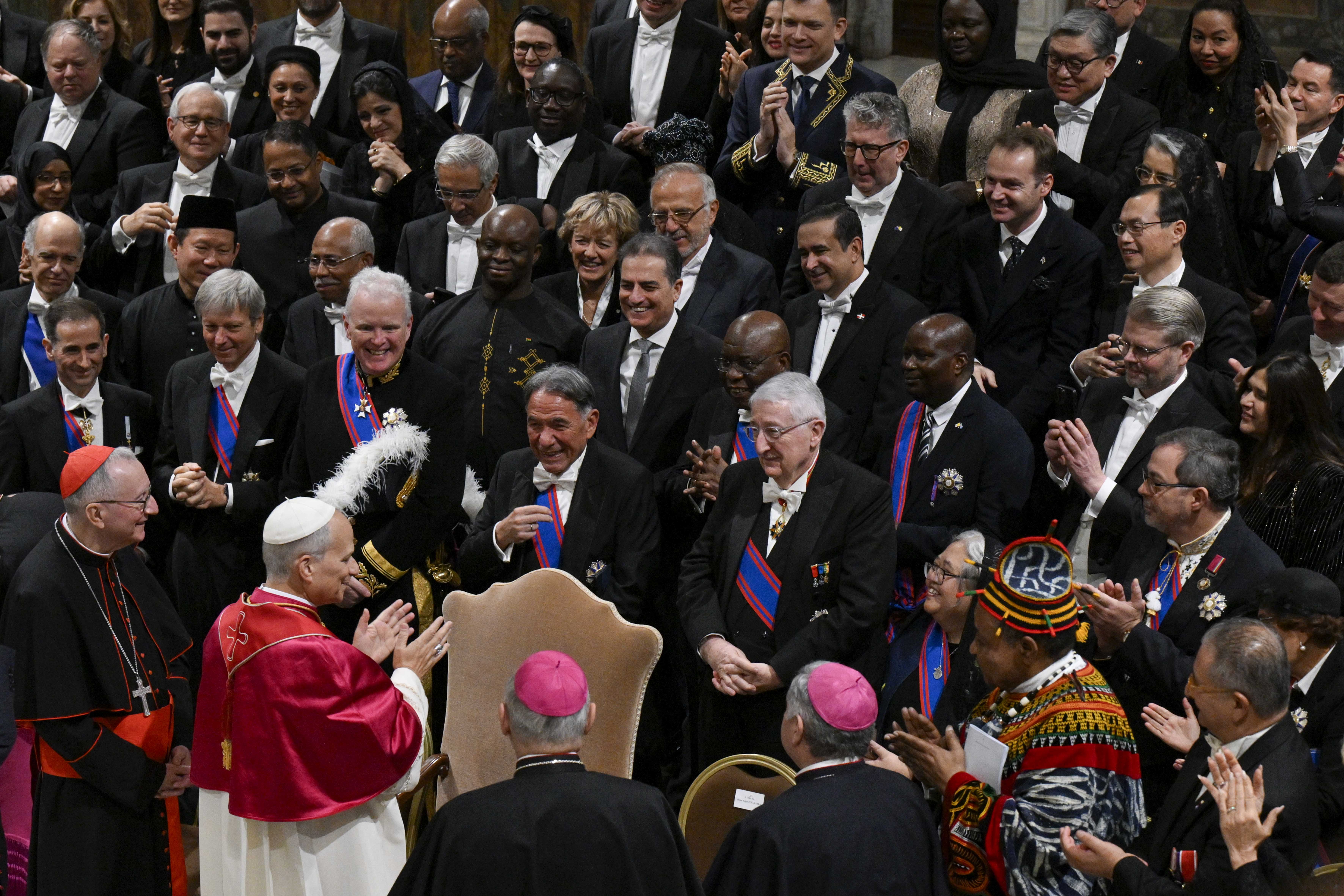
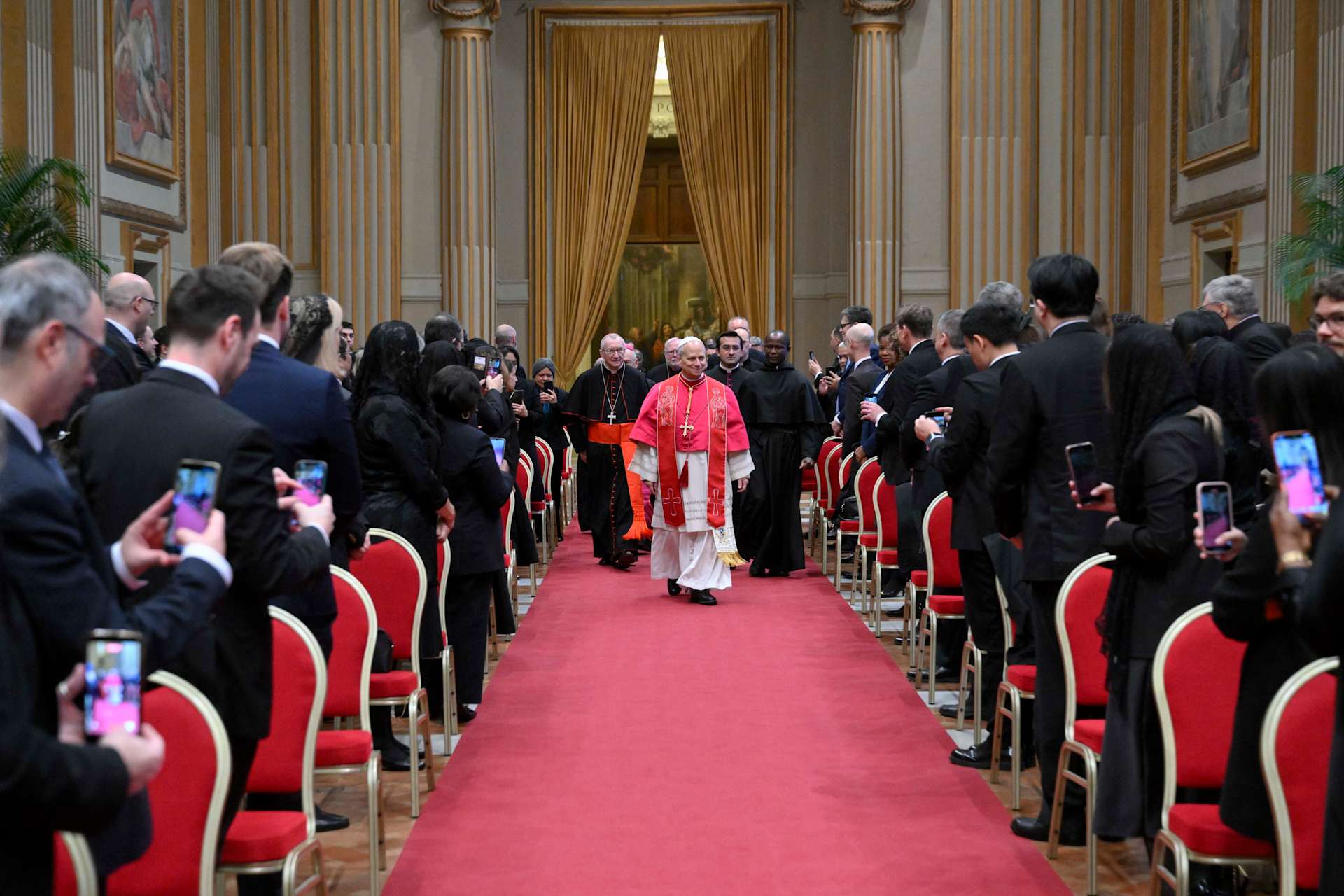
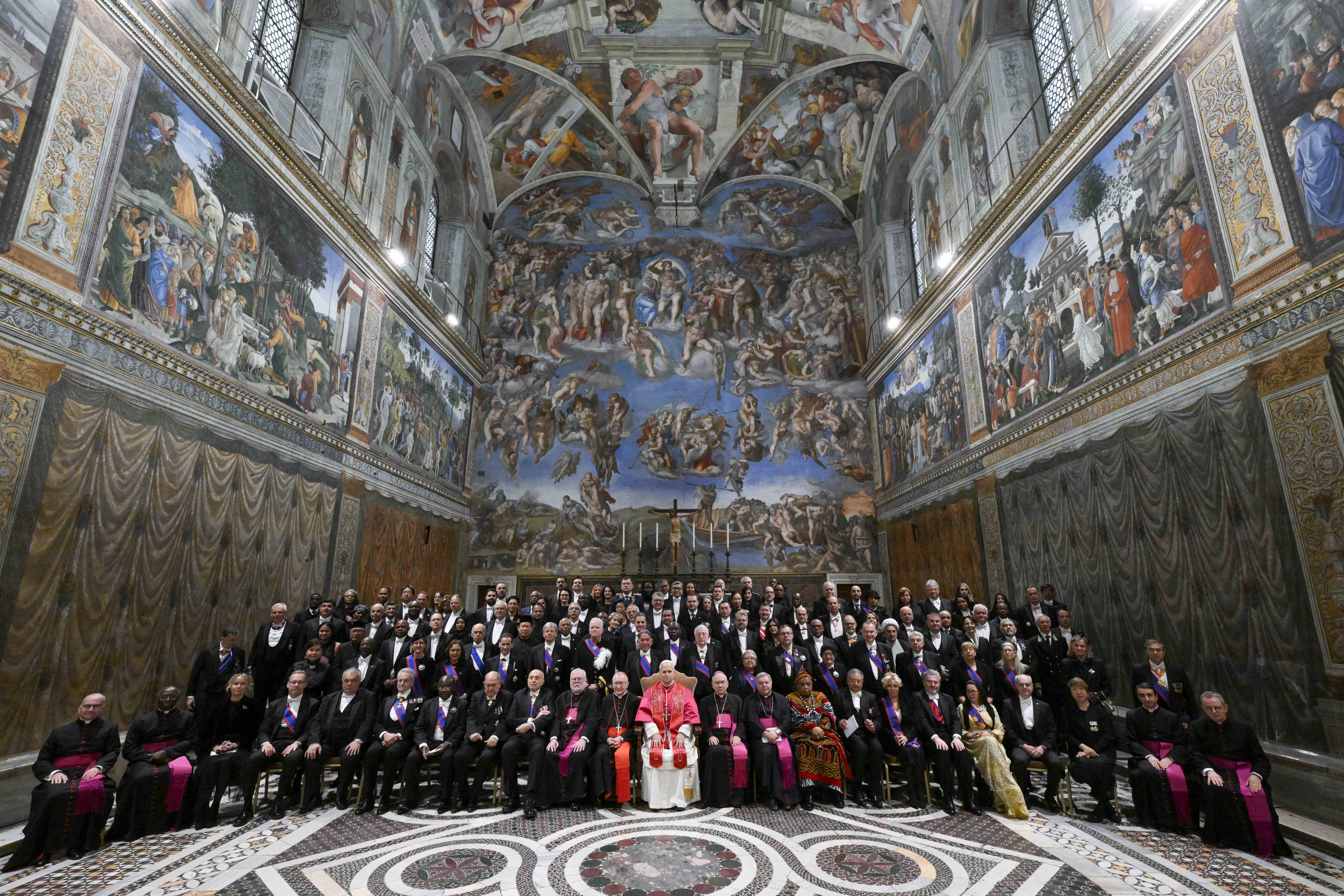
“A diplomacy that promotes dialogue and seeks consensus among all parties is being replaced by a diplomacy based on force, by either individuals or groups of allies. War is back in vogue and a zeal for war is spreading,” he told ambassadors and other diplomatic representatives to the Holy See in the Apostolic Palace on Jan. 9. Currently, 184 states have diplomatic relations with the Holy See.
“Peace is no longer sought as a gift and a desirable good in itself,” the pontiff continued. “Instead, peace is sought through weapons as a condition for asserting one’s own dominion. This gravely threatens the rule of law, which is the foundation of all peaceful civil coexistence.”
The Holy Father called for concern for the common good of peoples to take precedence over “the defense of partisan interests” amid escalating tensions, pointing in particular to Venezuela, for which he reiterated an appeal “to respect the will of the Venezuelan people, and to safeguard the human and civil rights of all.”
Leo framed his speech, part of the annual new year greeting to the diplomatic corps, within St. Augustine of Hippo’s work of Christian philosophy “De Civitate Dei” (“City of God”).
“The ‘City of God’ does not propose a political program. Instead, it offers valuable reflections on fundamental issues concerning social and political life, such as the search for a more just and peaceful coexistence among peoples. Augustine also warns of the grave dangers to political life arising from false representations of history, excessive nationalism and the distortion of the ideal of the political leader,” the pope said.
He called “City of God,” written in the fifth century, highly relevant to the present time, marked by widespread migration and the “profound readjustment of geopolitical balances and cultural paradigms.”
Human rights short-circuited
Leo lamented what he called a “short circuit” of human rights around the world today, especially the right to life.
“We firmly reiterate that the protection of the right to life constitutes the indispensable foundation of every other human right. A society is healthy and truly progresses only when it safeguards the sanctity of human life and works actively to promote it,” he said.
He also called out the restriction of the right to freedom of expression, freedom of conscience, religious freedom, and the right to life in favor of other “so-called new rights,” so that “the very framework of human rights is losing its vitality and creating space for force and oppression.”
“This occurs when each right becomes self-referential, and especially when it becomes disconnected from reality, nature, and truth,” he added.
Christian persecution
Pope Leo said Christian persecution is one of the most widespread human rights crises today, with over 380 million believers around the world suffering high or extreme levels of discrimination, violence, and oppression.
He recalled the victims of religiously motivated violence in Bangladesh, in the Sahel region, in Nigeria, and those killed or injured in the terrorist attack on the parish of St. Elias in Damascus in June.
The pontiff also decried “a subtle form of religious discrimination against Christians” taking place even in Christian-majority countries in Europe and the Americas.
“There, they are sometimes restricted in their ability to proclaim the truths of the Gospel for political or ideological reasons, especially when they defend the dignity of the weakest, the unborn, refugees and migrants, or promote the family,” he said.
Leo also called for respect for the freedom of other religious communities and the rejection of all forms of antisemitism.
The meaning of words
The Holy Father also spoke about debates over the meaning of words and how they are tied to attacks on freedom of expression.
“Rediscovering the meaning of words is perhaps one of the primary challenges of our time. When words lose their connection to reality, and reality itself becomes debatable and ultimately incommunicable,” he said.
“We should also note the paradox that this weakening of language is often invoked in the name of freedom of expression itself. However, on closer inspection, the opposite is true, for freedom of speech and expression is guaranteed precisely by the certainty of language and the fact that every term is anchored in the truth,” he noted.
He called it painful to see the space for genuine freedom of expression rapidly shrink, especially in the West.
“At the same time, a new Orwellian-style language is developing which, in an attempt to be increasingly inclusive, ends up excluding those who do not conform to the ideologies that are fueling it,” he said.
A consequence of this, Leo said, is that the freedom of conscience, another fundamental human right, is increasingly questioned by states.
The freedom of conscience, which “establishes a balance between the collective interest and individual dignity,” protects individuals “to refuse legal or professional obligations that conflict with moral, ethical, or religious principles deeply rooted in their personal lives,” such as military service, abortion, or euthanasia.
“Conscientious objection is not rebellion but an act of fidelity to oneself,” he underlined.
Life and the family
Pope Leo urged states to protect the institution of the family as “the vocation to love and to life” manifested in the “exclusive and indissoluble union between a woman and a man” and implying a “fundamental ethical imperative for enabling families to welcome and fully care for unborn life.”
Noting the increasing priority of raising birth rates, he emphasized life as a gift to be cherished and said “we categorically reject any practice that denies or exploits the origin of life and its development,” including abortion and surrogacy.
He added that the Holy See is also concerned about projects aimed at financing cross-border mobility to increase access to abortion and “considers it deplorable that public resources are allocated to suppress life rather than being invested to support mothers and families.”
For the sick and elderly, “civil society and states also have a responsibility to respond concretely to situations of vulnerability, offering solutions to human suffering, such as palliative care, and promoting policies of authentic solidarity rather than encouraging deceptive forms of compassion such as euthanasia,” he said.
The pontiff underlined the inalienable dignity of every person and that migrants, as people, have “inalienable rights that must be respected in every situation.”
“I renew the Holy See’s hope that the actions taken by states against criminality and human trafficking will not become a pretext for undermining the dignity of migrants and refugees,” he said.
Pride and self-love
Leo recalled that in Augustine’s “City of God,” the saint interprets events and history according to a model of two cities. The city of God is characterized by God’s unconditional love and love for one’s neighbor, especially the poor, while the earthly city “is centered on pride and self-love (‘amor sui’), on the thirst for worldly power and glory that leads to destruction.”
“While St. Augustine highlights the coexistence of the heavenly and earthly cities until the end of time, our era seems somewhat inclined to deny the city of God its ‘right of citizenship,’” the pope noted.
“Yet, as Augustine notes, ‘Great is the folly of pride in those individuals who think that the supreme good can be found in this life and that they can become happy by their own resources,’” Leo said. “Pride obscures both reality itself and our empathy towards others. It is no coincidence that pride is always at the root of every conflict.”